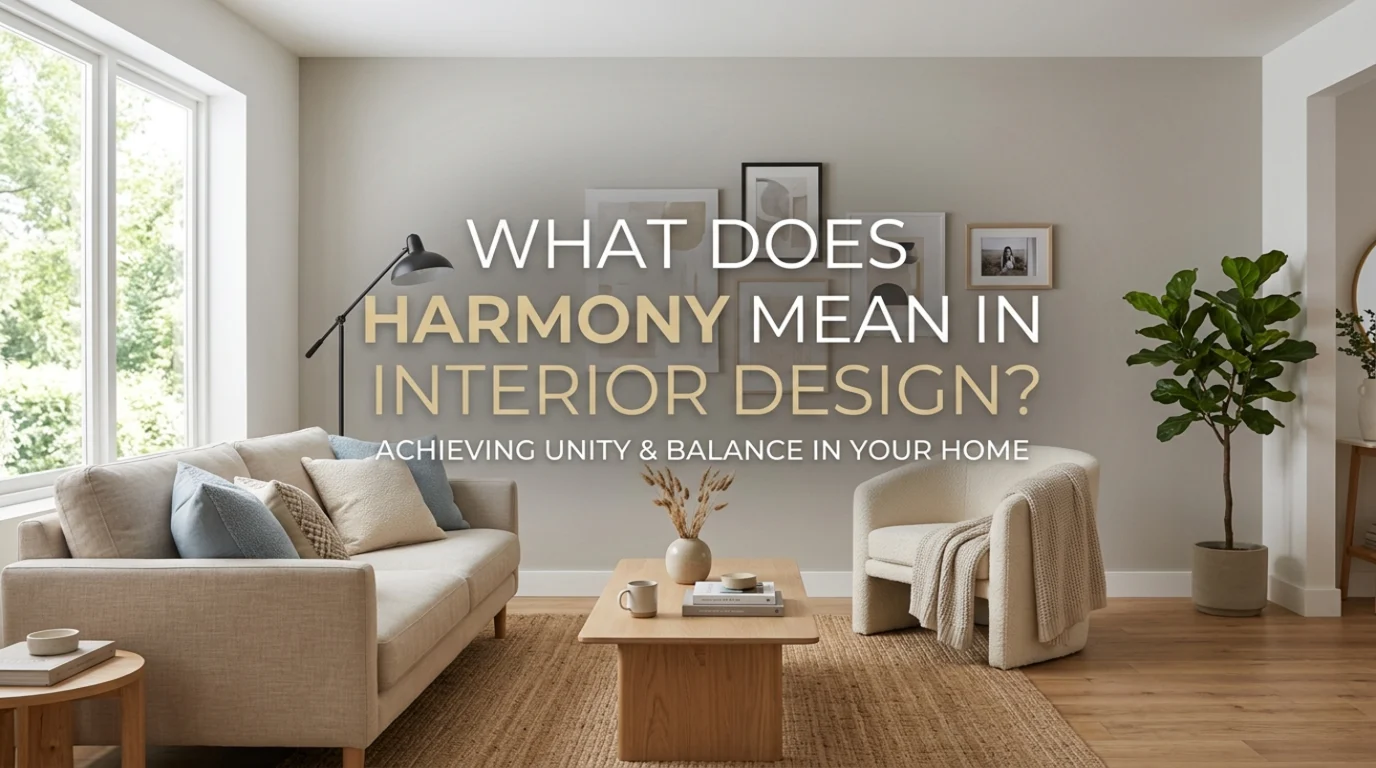
Quick Definition: Harmony in interior design refers to the principle of creating a unified, balanced, and visually pleasing space where all design elements such as colors, furniture, textures, patterns, lighting, and décor work together seamlessly. Rather than competing for attention, these elements complement one another to create a cohesive and comfortable environment.
Harmony is one of the most important principles of interior design. It ensures that every element within a room feels connected, creating a sense of order, consistency, and visual comfort.
Whether you’re decorating a cozy bedroom, designing a modern office, or renovating an entire home, harmony helps transform individual pieces into one cohesive design.
Harmony in interior design is the design principle of combining colors, furniture, textures, patterns, lighting, and decorative elements so they work together as one cohesive whole. A harmonious room feels balanced, comfortable, organized, and visually appealing without appearing cluttered or disconnected.
Harmony doesn’t mean everything has to match perfectly. Instead, it means different elements complement one another while maintaining unity throughout the space.
Origin
The concept of harmony has existed in art and architecture for thousands of years.
Ancient Greek philosophers believed beauty came from balance, proportion, and order. These ideas later influenced architecture, sculpture, painting, and eventually interior design.
During the Renaissance, designers emphasized symmetry and proportion to create elegant living spaces. Over time, new design movements such as Art Deco, Mid-Century Modern, Scandinavian, and Contemporary design continued using harmony as a foundational principle, even while introducing new materials and aesthetics.
Today, harmony remains one of the core principles taught in interior design schools around the world.
Introduction
Have you ever walked into a room that immediately felt peaceful, inviting, and well-designed even if you couldn’t explain why? Chances are, that space was built around the principle of harmony.
Interior designers rarely choose furniture, paint colors, rugs, artwork, and lighting randomly. Every piece contributes to a larger visual story. When these elements relate to one another through color, proportion, texture, or style, the result is a harmonious interior.
On the other hand, a room lacking harmony often feels chaotic or uncomfortable. Furniture may clash, colors may compete, and decorative accessories may seem out of place.
Understanding harmony is essential whether you’re decorating your first apartment, remodeling your dream home, or simply refreshing a single room. By learning how harmony works, you’ll be able to create interiors that not only look beautiful but also feel welcoming and functional.
Popularity
Harmony has become increasingly important as homeowners focus on creating spaces that support both aesthetics and well-being.
Modern design trends emphasize:
- Comfortable living
- Minimal visual clutter
- Functional layouts
- Balanced color palettes
- Natural materials
- Consistent design themes
- Wellness-focused interiors
Harmony is especially valued in popular styles such as:
- Scandinavian
- Japandi
- Modern farmhouse
- Contemporary
- Minimalist
- Coastal
- Transitional
Social media platforms like Pinterest and Instagram have also increased awareness of harmonious interiors by showcasing carefully coordinated rooms.
How It Is Used
Interior designers apply harmony throughout the design process rather than treating it as a final decorative step.
Harmony can be achieved through several design elements.
Color Harmony
Using complementary or analogous color palettes creates consistency.
Example:
- Soft beige walls
- Cream furniture
- Warm wood flooring
- Sage green accents
These colors work together without overwhelming the room.
Material Harmony
Combining materials that complement one another.
Example:
- Oak wood
- Linen fabrics
- Stone countertops
- Matte black hardware
Furniture Harmony
Furniture should share similar proportions, styles, or finishes.
Example:
A modern sofa pairs naturally with simple coffee tables and clean-lined shelving.
Texture Harmony
Mixing textures creates visual interest while maintaining balance.
Examples include:
- Wool rugs
- Cotton cushions
- Velvet chairs
- Wooden tables
- Woven baskets
Lighting Harmony
Lighting fixtures should support the overall design style.
For example:
A rustic dining room may feature wrought iron pendant lights, while a contemporary space might use sleek LED fixtures.
Pattern Harmony
Patterns should vary in scale but relate through shared colors or themes.
Examples
Friendly Examples
Here are some everyday examples of harmony in interior design.
| Room | Harmonious Design |
| Living Room | Neutral sofa, wooden coffee table, matching cushions, soft lighting |
| Bedroom | White bedding, light oak furniture, pastel artwork |
| Kitchen | White cabinets, marble countertop, brushed brass hardware |
| Dining Room | Matching dining chairs with coordinating centerpiece |
| Home Office | Coordinated desk, shelving, chair, and lighting |
Professional Examples
Interior designers often describe harmony like this:
| Statement | Meaning |
| The color palette creates harmony. | Colors complement each other. |
| Harmony is achieved through repeated materials. | Similar finishes unify the room. |
| The furniture selection maintains harmony. | Pieces fit together stylistically. |
| The lighting reinforces visual harmony. | Fixtures support the overall theme. |
Funny Examples
While harmony is a serious design principle, it’s easy to spot when it’s missing!
- A Victorian sofa next to a futuristic gaming chair. 😄
- Neon green curtains with elegant crystal chandeliers.
- Five different wood finishes competing in one room.
- Bright zebra-print wallpaper paired with floral furniture.
- Every décor trend from the past 20 years squeezed into one living room!
These exaggerated combinations show how a lack of harmony can make a space feel confusing.
Comparison with Similar Terms
Harmony is often confused with other interior design principles. While they’re related, each has a unique role.
| Principle | Meaning | Primary Goal |
| Harmony | Elements work together cohesively | Unity |
| Balance | Visual weight is evenly distributed | Stability |
| Unity | Overall sense of togetherness | Consistency |
| Contrast | Differences create visual interest | Emphasis |
| Rhythm | Repetition guides the eye | Movement |
| Emphasis | One feature becomes the focal point | Attention |
| Proportion | Objects relate appropriately in size | Scale |
Harmony vs Unity
| Harmony | Unity |
| Focuses on how elements complement each other | Focuses on the overall feeling of oneness |
| Achieved through color, texture, and style | Result of multiple design principles working together |
Harmony vs Balance
| Harmony | Balance |
| Creates visual cohesion | Creates visual stability |
| Connects elements | Distributes visual weight |
Both principles often work together in successful interiors.
Alternate Meanings
Although harmony has a specific meaning in interior design, the word appears in many other fields.
| Field | Meaning |
| Music | Pleasant combination of notes |
| Art | Visual agreement among elements |
| Relationships | Peaceful coexistence |
| Nature | Balanced interaction between living things |
| Business | Team cooperation |
| Spirituality | Inner peace and balance |
Despite these different uses, the underlying idea remains consistent: different parts work together to create a pleasing whole.
Professional or Polite Alternatives
Interior designers may use several related terms when discussing harmony.
These include:
- Cohesion
- Visual unity
- Design consistency
- Balanced composition
- Coordinated design
- Integrated aesthetic
- Unified appearance
- Cohesive styling
For example, instead of saying:
“The room lacks harmony.”
A designer might say:
“The space would benefit from greater visual cohesion.”
These alternatives are common in design presentations and client consultations.
Common Mistakes
Achieving harmony doesn’t mean making every room identical. Here are some common mistakes to avoid.
1. Matching Everything
A room where every piece is identical can feel flat and uninspiring.
2. Mixing Too Many Styles
Combining farmhouse, industrial, traditional, and ultra-modern furniture without a clear plan often creates visual confusion.
3. Ignoring Color Relationships
Random color choices can make a room feel disconnected.
4. Using Too Many Patterns
Patterns should complement rather than compete with one another.
5. Forgetting Scale and Proportion
Oversized furniture in a small room disrupts harmony.
6. Overdecorating
Too many decorative accessories can overwhelm even a well-designed space.
7. Ignoring Lighting
Lighting should enhance the design rather than clash with it.
Quick Tips
Create more harmonious interiors by following these practical guidelines:
- Choose a consistent color palette.
- Repeat materials throughout the room.
- Limit the number of dominant colors.
- Mix textures while keeping colors coordinated.
- Select furniture with complementary styles.
- Use lighting that matches the room’s design theme.
- Keep décor balanced without overcrowding surfaces.
- Introduce contrast thoughtfully to maintain visual interest.
- Edit unnecessary accessories for a cleaner look.
- Step back and evaluate whether every element supports the overall design.
FAQ
1. What does harmony mean in interior design?
Harmony is the principle of arranging colors, furniture, textures, patterns, lighting, and décor so they work together to create a cohesive and visually pleasing space.
2. Why is harmony important in interior design?
Harmony makes a room feel organized, comfortable, balanced, and inviting. It helps prevent spaces from looking cluttered or disjointed.
3. Is harmony the same as balance?
No. Harmony focuses on how design elements relate to one another, while balance concerns the distribution of visual weight within a room.
4. How can I create harmony in my home?
Start with a cohesive color palette, coordinate furniture styles, repeat materials and finishes, use complementary textures, and avoid introducing too many unrelated design elements.
5. Can different interior design styles still create harmony?
Yes. Mixing styles can work beautifully when they share common colors, materials, proportions, or design themes.
6. Does harmony mean everything must match?
No. Harmony is about coordination rather than perfect matching. Variety adds character as long as the elements complement one another.
7. What are the key elements that create harmony?
Color, texture, furniture, lighting, materials, patterns, scale, and proportion all contribute to a harmonious design.
8. What happens when a room lacks harmony?
A room without harmony may feel cluttered, chaotic, unbalanced, or visually uncomfortable because the elements compete instead of working together.
Conclusion
So, what does harmony mean in interior design? It is the principle of bringing together colors, furniture, textures, lighting, patterns, and decorative elements to create a unified and visually pleasing space. Harmony transforms individual pieces into a cohesive environment where every detail contributes to the overall aesthetic.
Whether you’re designing a minimalist apartment, a cozy family home, or a professional office, harmony helps create interiors that are both beautiful and functional. By choosing complementary colors, coordinating materials, balancing textures, and maintaining a consistent design style, you can build spaces that feel welcoming, timeless, and comfortable. Remember, successful interior design isn’t about making everything identical it’s about ensuring every element works together to tell one cohesive visual story.