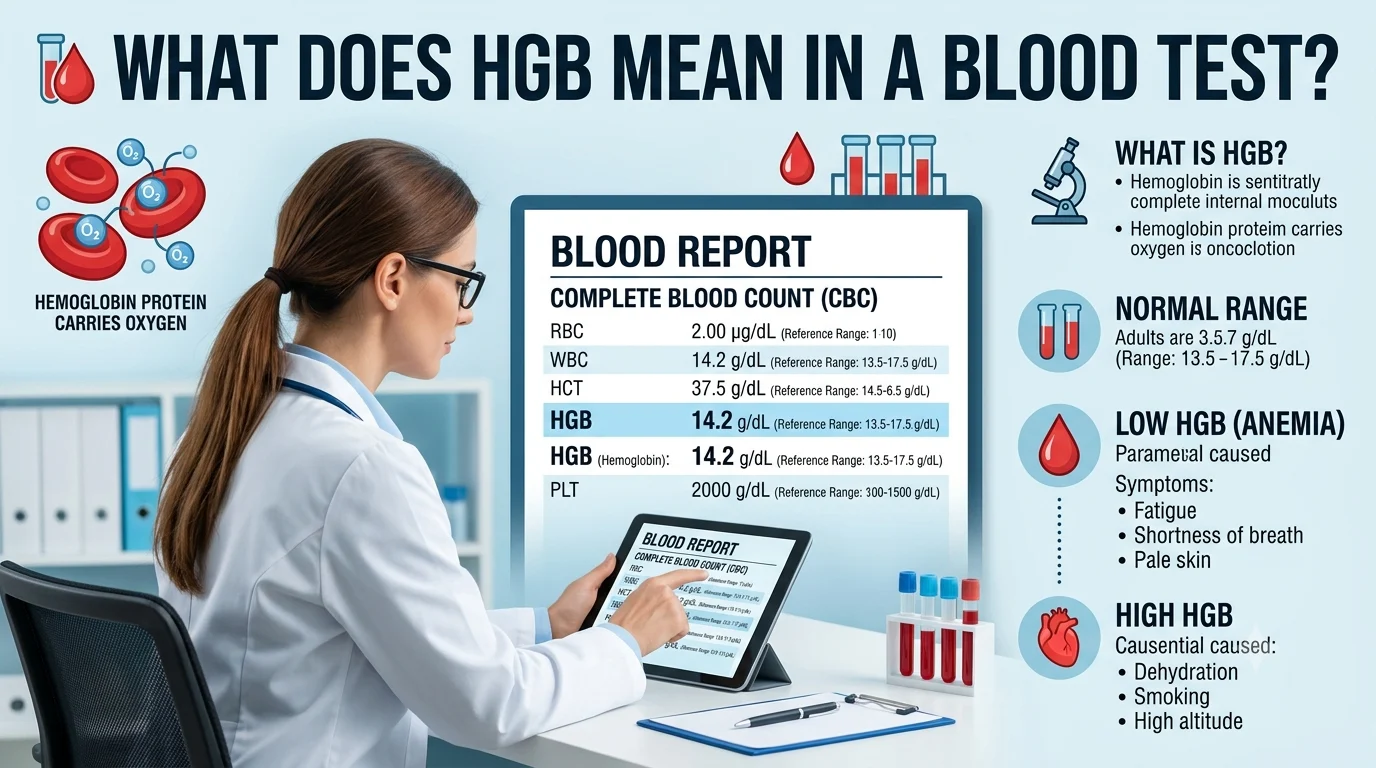
Quick Defination: HGB stands for hemoglobin, an iron-rich protein found in red blood cells. A hemoglobin test measures how much of this protein is present in your blood and is commonly included in a complete blood count (CBC). The result helps evaluate your body’s ability to transport oxygen and may assist in identifying conditions such as anemia or dehydration.
Seeing HGB on your blood test results can be confusing if you’re unfamiliar with medical abbreviations. In a blood test, HGB stands for hemoglobin, a protein inside red blood cells that carries oxygen from your lungs to the rest of your body and helps transport carbon dioxide back to your lungs.
Because hemoglobin plays a vital role in delivering oxygen, your HGB level gives healthcare providers important information about your overall health. Whether your result is low, normal, or high, understanding what HGB means can help you better interpret your lab report and know when to discuss the results with your healthcare provider.
| Detail | Explanation |
| Most Common Meaning | Hemoglobin |
| Full Form | Hemoglobin |
| Found In | Complete Blood Count (CBC) |
| Main Purpose | Measures oxygen-carrying protein in blood |
| Formal or Informal | Medical abbreviation |
What Is Hemoglobin?
Hemoglobin is a protein inside red blood cells that binds to oxygen in your lungs and delivers it throughout your body. It also helps carry carbon dioxide from your tissues back to the lungs, where it is exhaled.
Without enough hemoglobin, your organs and muscles may not receive sufficient oxygen, leading to symptoms such as fatigue, weakness, dizziness, or shortness of breath.
Example
A routine annual physical includes a CBC. The lab report lists:
HGB: 13.8 g/dL
If this value falls within the laboratory’s reference range for the individual, it generally indicates a normal hemoglobin level.
Why Is the HGB Test Important?
Doctors measure HGB because it provides valuable information about your overall health and blood function.
An HGB test may help:
- Detect anemia
- Evaluate blood loss
- Monitor chronic diseases
- Assess nutritional deficiencies
- Check recovery after treatment
- Monitor certain medical conditions
Since hemoglobin directly affects oxygen delivery, abnormal levels often prompt additional evaluation.
What Is a Normal HGB Level?
Normal hemoglobin ranges vary slightly between laboratories and may differ based on age, sex, pregnancy, and other individual factors.
A commonly used reference guide is:
| Group | Typical Hemoglobin Range (g/dL) |
| Adult men | Approximately 13.5–17.5 |
| Adult women | Approximately 12.0–15.5 |
| Children | Varies by age |
Always compare your result with the reference range provided by the laboratory that performed your test, since normal values may differ slightly.
What Does Low HGB Mean?
A lower-than-normal HGB level often suggests that your body has fewer healthy red blood cells or less hemoglobin than expected.
Common possible causes include:
- Iron deficiency
- Vitamin B12 deficiency
- Folate deficiency
- Blood loss
- Chronic kidney disease
- Certain chronic illnesses
- Some bone marrow disorders
Possible symptoms include:
- Fatigue
- Weakness
- Pale skin
- Dizziness
- Shortness of breath
- Rapid heartbeat
A low HGB result does not identify the exact cause on its own, so healthcare providers often consider additional tests and your medical history.
What Does High HGB Mean?
A higher-than-normal HGB level may indicate that your body is producing more red blood cells or that your blood is more concentrated.
Possible reasons include:
- Dehydration
- Living at high altitude
- Smoking
- Certain lung conditions
- Certain heart conditions
- Some bone marrow disorders
High HGB does not automatically indicate a serious problem. Your healthcare provider will interpret the result alongside your symptoms, medical history, and other laboratory findings.
How Doctors Interpret HGB Results
Healthcare providers rarely interpret HGB in isolation.
Instead, they review it alongside other blood test values, including:
- Red blood cell (RBC) count
- Hematocrit (HCT)
- Mean corpuscular volume (MCV)
- Mean corpuscular hemoglobin (MCH)
- Mean corpuscular hemoglobin concentration (MCHC)
Looking at these measurements together provides a clearer picture of your blood health and can help identify the underlying cause of abnormal results.
How Context Changes the Meaning of HGB Results
The number alone doesn’t tell the whole story. Doctors consider several factors when interpreting your HGB value.
Example 1
Low HGB + low iron levels
May suggest iron deficiency anemia.
Example 2
High HGB after dehydration
The level may return to normal after adequate hydration.
Example 3
Low HGB after surgery
Blood loss may contribute to a temporary decrease.
Example 4
Stable HGB during treatment
A consistent result may indicate that therapy is working as expected.
Context, symptoms, medications, and other test results all influence the interpretation.
Conditions Commonly Associated With Abnormal HGB
An abnormal HGB result can be associated with various health conditions, including:
- Iron-deficiency anemia
- Vitamin deficiency anemia
- Chronic kidney disease
- Chronic inflammatory conditions
- Lung disease
- Heart disease
- Polycythemia
- Significant blood loss
It’s important to remember that HGB is a screening measure rather than a diagnosis. Additional testing is often needed to determine the exact cause.
When Should You Be Concerned?
An abnormal HGB result does not necessarily indicate a medical emergency.
However, you should discuss your result with a healthcare provider if:
- Your HGB is outside the laboratory’s reference range.
- You have symptoms such as severe fatigue, chest pain, or difficulty breathing.
- Your levels continue to change over time.
- You have an underlying medical condition requiring regular monitoring.
Only a qualified healthcare professional can determine whether further testing or treatment is necessary.
Common Mistakes About HGB
| Common Mistake | Correct Understanding |
| HGB alone diagnoses a disease | It is one part of a broader medical evaluation. |
| Every abnormal HGB means anemia | High HGB and other conditions can also affect results. |
| Normal HGB guarantees perfect health | Other blood tests and symptoms remain important. |
Related Blood Test Terms
| Term | Meaning | Main Difference |
| HGB | Hemoglobin | Measures oxygen-carrying protein. |
| RBC | Red Blood Cell Count | Counts the number of red blood cells. |
| HCT | Hematocrit | Measures the percentage of blood made up of red blood cells. |
| MCV | Mean Corpuscular Volume | Indicates average red blood cell size. |
| CBC | Complete Blood Count | A panel that includes HGB and several other blood measurements. |
Origin and Medical Use
HGB is the standard medical abbreviation for hemoglobin and has long been used in laboratory reports, medical records, and clinical practice. It appears routinely in complete blood count (CBC) results and is recognized internationally by healthcare professionals. While the abbreviation is consistent, laboratories may use slightly different reference ranges based on their testing methods.
Quick Recap
- HGB stands for hemoglobin.
- Hemoglobin carries oxygen throughout your body.
- HGB is commonly measured as part of a CBC blood test.
- Low or high HGB levels can have many possible causes and require interpretation alongside other findings.
- Your healthcare provider should interpret your result based on your symptoms, medical history, and additional laboratory values.
Frequently Asked Questions
What does HGB mean in a blood test?
HGB stands for hemoglobin, the oxygen-carrying protein inside red blood cells measured during a complete blood count.
What is a normal HGB level?
Normal HGB ranges vary by age, sex, pregnancy status, and laboratory reference values, so compare your result with your report.
What does low HGB mean?
Low HGB may suggest anemia, blood loss, nutritional deficiencies, or certain medical conditions requiring further evaluation.
What does high HGB mean?
High HGB may be associated with dehydration, high altitude, smoking, or certain medical conditions affecting red blood cell production.
Can HGB alone diagnose a medical condition?
No, HGB is interpreted alongside symptoms, medical history, and other laboratory tests before any diagnosis is made.
Final Thoughts
Understanding what HGB means in a blood test can make your lab results easier to interpret and help you have more informed conversations with your healthcare provider. HGB measures hemoglobin, the protein that carries oxygen throughout your body, making it an essential indicator of blood health. While abnormal values may point to a variety of conditions, they should always be evaluated alongside your symptoms, medical history, and other blood test results. Rather than focusing on a single number, consider your HGB result as one important piece of your overall health assessment.
Read More Articles About
- What Does Hyung Mean In Korean Text And Conversation? Full Guide For 2026
- What Does + Mean In Betting? Meaning, Payouts, And Winning Strategies For 2026
- What Does POD Mean In Banking? How Payable On Death Accounts Work In 2026
- What Does Harmony Mean In Interior Design? Why It Matters And How To Use It In 2026