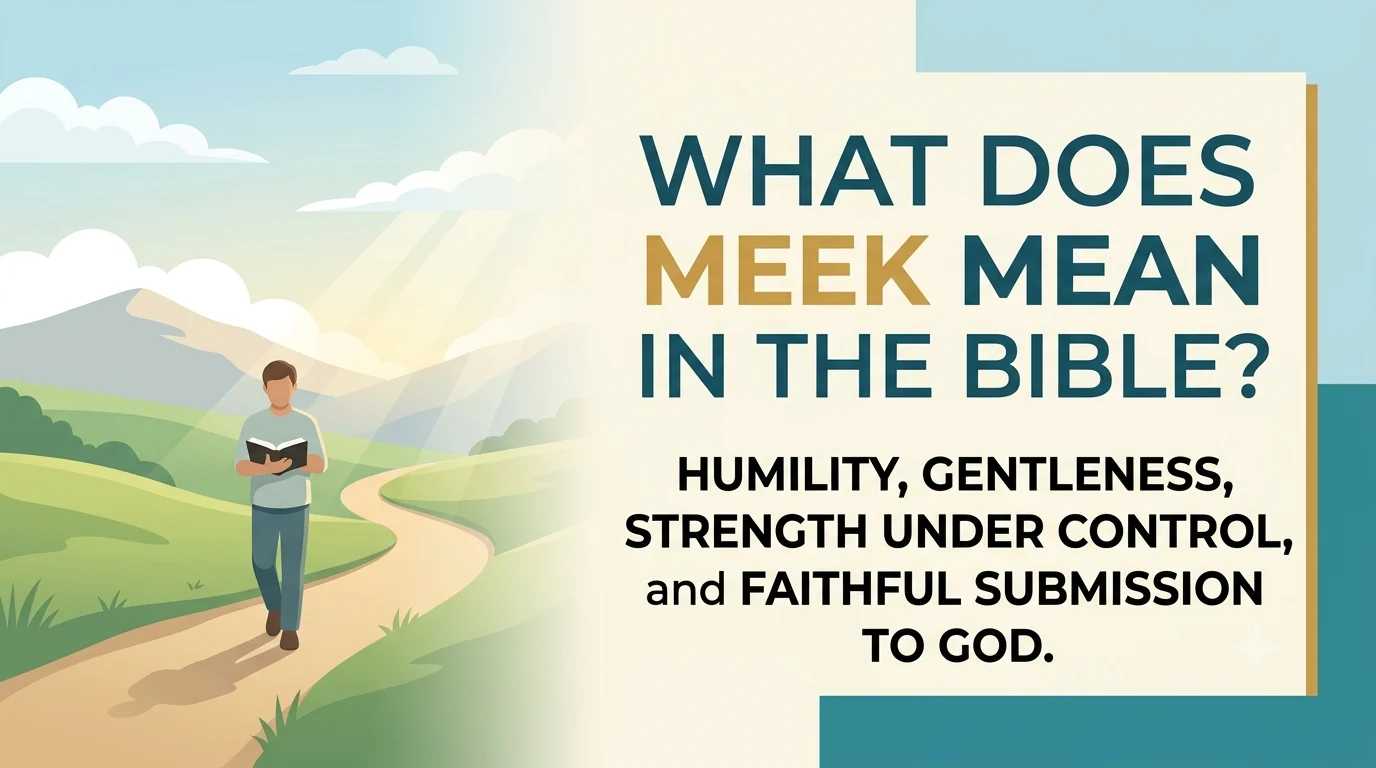
Quick Defination: In the Bible, meek generally describes a person who is humble, gentle, patient, and self-controlled rather than aggressive, proud, or revengeful. Biblical meekness is not passive weakness; it involves having strength while choosing to respond with humility and restraint.One of the best-known examples appears in Jesus’ teaching in the Beatitudes:“Blessed are the meek: for they shall inherit the earth.” Matthew 5:5, KJV
The biblical concept connects meekness with trusting God, controlling one’s response to wrongdoing, and treating others with gentleness.
| Detail | Explanation |
| Biblical Meaning | Humility, gentleness, and controlled strength |
| Opposite Traits | Pride, arrogance, aggression, uncontrolled anger |
| Common Biblical Idea | Trusting God instead of seeking personal revenge |
| Important Example | Matthew 5:5 |
| Does It Mean Weakness? | No |
When you hear the word meek, you might picture someone who is weak, timid, or afraid to speak up. In the Bible, however, meekness does not mean weakness. Biblical meekness describes a person who is humble, gentle, patient, and willing to submit their strength and desires to God rather than acting out of pride, anger, or revenge. Jesus specifically praised the meek in Matthew 5:5, saying that “the meek” would inherit the earth. Understanding what meek means in the Bible requires looking beyond the modern English sense of the word and considering how biblical writers used the idea of humility, gentleness, and self-control.
What Is The Biblical Meaning Of Meekness?
Meekness is a character quality marked by humility, gentleness, patience, and appropriate self-control.
A meek person does not need to dominate others to prove their worth. Instead, they can possess strength, authority, knowledge, or influence while choosing to exercise those qualities responsibly.
This distinction is important because modern English sometimes uses meek to describe someone who is overly submissive or lacking confidence. The biblical idea is richer.
Meekness does not require you to tolerate every form of wrongdoing, remain silent about injustice, or become incapable of making decisions. Rather, it points toward how strength and authority are exercised.
A person can be strong and still be meek.
Does Meek Mean Weak In The Bible?
No. Biblical meekness does not mean being weak.
Weakness is a lack of strength or ability. Meekness concerns how a person uses the strength they have.
Someone may have the ability to respond harshly but choose patience instead. Someone may have authority over another person but choose compassion instead of humiliation. Someone may feel anger but refuse to let uncontrolled anger determine their behavior.
That is why meekness can be understood as strength governed by humility and self-control, rather than an absence of strength.
This distinction helps explain why the biblical description of meekness is a virtue rather than an insult.
Meekness In Jesus’ Teaching
The most famous biblical reference to meekness is found in Matthew 5:5:
“Blessed are the meek: for they shall inherit the earth.”
This statement appears in the Sermon on the Mount as part of the Beatitudes.
Jesus presents meekness as a quality associated with God’s blessing. The statement challenges the assumption that power, aggression, and domination are the only ways to gain what matters.
Instead, Jesus highlights a posture of humility and dependence on God.
The phrase also echoes language found in Psalm 37, where the meek are associated with those who trust God rather than becoming consumed by anger over the apparent success of wicked people.
What Does Meek Mean In Matthew 5:5?
In Matthew 5:5, meek refers to people who are humble, gentle, and trusting in God rather than driven by pride, aggression, or retaliation.
The Greek word translated as “meek” is praus, a term associated with gentleness or mildness. Its meaning should be understood within the larger biblical context rather than reduced to the modern idea of being timid.
Matthew 5:5 also connects with Psalm 37:11, which speaks of the meek inheriting the land.
The statement therefore fits a broader biblical theme: people who trust God and refuse to live by prideful retaliation can ultimately depend on God’s justice and provision.
How The Meaning Of Meek Changes With Context
Biblical meekness appears in different situations, but several characteristics help identify it.
Meekness Toward God
Meekness can involve submitting your will to God rather than insisting that your own desires must always come first.
This includes humility, teachability, and willingness to follow God’s direction.
Meekness Toward Other People
Meekness affects how you treat others, especially during disagreement or conflict.
Instead of responding with unnecessary hostility, a meek person seeks a gentle and controlled response.
Meekness During Conflict
Biblical meekness does not mean pretending that wrong behavior is acceptable. It means responding without allowing anger, pride, or revenge to control you.
Meekness Under Pressure
A meek person may experience strong emotions but does not have to express every emotion through aggression.
This is where meekness overlaps with patience, humility, and self-control.
Biblical Examples Of Meekness
Several biblical passages help illustrate the concept.
Moses
Numbers 12:3 describes Moses as very meek. This is significant because Moses was also a leader who confronted Pharaoh, challenged injustice, and guided Israel through difficult circumstances.
His example shows that biblical meekness cannot simply mean being passive or powerless.
Jesus
Jesus described Himself as “meek and lowly in heart” in Matthew 11:29.
Yet the Gospels also portray Jesus speaking firmly, confronting hypocrisy, and acting decisively.
This combination demonstrates why meekness should not be confused with weakness. Gentleness and strength can exist together.
The Meek In Psalm 37
Psalm 37 connects the meek with those who trust God rather than becoming consumed by the apparent prosperity of evildoers.
The passage encourages patience and confidence in God’s ultimate justice.
Meekness vs. Humility
Meekness and humility are closely related, but they are not identical.
Humility involves having a proper view of yourself and not placing yourself above others.
Meekness includes gentleness and controlled responses, particularly in how you exercise strength or respond to others.
For example, a humble person may recognize that they do not know everything. A meek person may possess strong opinions but express them without arrogance or unnecessary hostility.
The two qualities often reinforce each other.
Meekness vs. Gentleness
Gentleness is another closely related biblical concept.
Gentleness focuses especially on treating others with care rather than harshness. Meekness includes gentleness but also carries the broader idea of controlled strength, humility, and submission to God’s will.
The exact relationship between these concepts can vary depending on the biblical passage and translation, so they should not always be treated as perfect synonyms.
Is Being Meek A Good Thing In The Bible?
Yes. The Bible consistently presents meekness as a desirable character quality.
Jesus calls the meek blessed in Matthew 5:5, and other New Testament passages encourage believers to demonstrate gentleness, humility, and patience.
Meekness is especially valuable because it changes how a person responds to power, conflict, criticism, and personal offense.
It does not mean refusing to act. Instead, it encourages action without arrogance, cruelty, or uncontrolled anger.
Is Meekness The Same As Being Passive?
No. Biblical meekness is not the same as passivity.
A passive person may avoid action because they are afraid, uncertain, or unwilling to confront a situation.
A meek person can act decisively while remaining humble and controlled.
Moses provides a useful biblical example. He was described as meek while also taking significant leadership responsibilities and confronting powerful opposition.
Therefore, meekness should not be used as an excuse for cowardice or avoidance.
How Can Someone Practice Biblical Meekness?
Meekness is presented in Scripture as a quality that can shape everyday behavior.
You can practice it by:
- Listening before reacting.
- Controlling angry responses.
- Accepting correction without immediate defensiveness.
- Treating people with dignity.
- Refusing unnecessary revenge.
- Remaining humble when you have authority.
- Seeking God’s will instead of insisting on your own way.
- Responding to disagreement with gentleness.
- Recognizing that strength does not require domination.
These practices do not eliminate conviction or courage. Instead, they help ensure that courage and strength are expressed with wisdom and self-control.
Common Misunderstandings About Meekness
| Common Mistake | Correct Understanding |
| Thinking meek means weak | Biblical meekness involves controlled strength, not helplessness. |
| Thinking meek people never disagree | A meek person can disagree while remaining respectful and controlled. |
| Assuming meekness means accepting abuse | Meekness does not require someone to approve of wrongdoing or remain passive in harmful situations. |
Another mistake is assuming that meekness means having no confidence. Biblical meekness is compatible with courage, leadership, conviction, and responsible action.
Similar Biblical Qualities
| Quality | Meaning | Main Difference |
| Humility | Having a modest view of oneself | Focuses on pride and self-importance |
| Gentleness | Treating others without unnecessary harshness | Focuses strongly on interpersonal behavior |
| Patience | Enduring difficulty without giving way to anger | Focuses on endurance over time |
| Self-Control | Governing thoughts, emotions, and actions | Focuses on regulating behavior |
| Meekness | Gentle, humble, controlled strength | Brings several of these qualities together |
These qualities overlap, but each has its own emphasis in biblical teaching.
Why Did Jesus Say The Meek Would Inherit The Earth?
Jesus’ statement in Matthew 5:5 presents a reversal of ordinary expectations. Human societies often associate possession and influence with power, wealth, status, or domination.
The Beatitude instead points toward God’s kingdom and God’s ultimate purposes.
The wording also echoes Psalm 37:11, where the meek are promised the land. The message is not that meek people are naturally powerless and therefore receive the earth by accident. Rather, it points to God’s faithfulness toward those who trust Him instead of relying on prideful aggression.
The promise is therefore connected to God’s justice, kingdom, and ultimate restoration.
Does Meekness Mean Never Getting Angry?
No. Meekness does not require a person to experience no anger.
The biblical emphasis is on how anger and strength are handled. A person can recognize that something is wrong without allowing uncontrolled anger, revenge, or hatred to take over.
This is another reason meekness should not be confused with weakness. A meek person can have strong convictions while choosing a disciplined response.
Quick Recap
- Meekness in the Bible means humility, gentleness, patience, and controlled strength.
- Biblical meekness does not mean weakness or cowardice.
- Jesus says the meek are blessed in Matthew 5:5.
- Moses is described as meek in Numbers 12:3.
- Jesus describes Himself as meek and humble in Matthew 11:29.
- Meekness can involve trusting God rather than seeking personal revenge.
- The meaning is closely related to humility, gentleness, patience, and self-control.
Frequently Asked Questions
What does meek mean in the Bible?
Meek in the Bible describes humility, gentleness, patience, and strength exercised with self-control rather than aggression.
Does meek mean weak in the Bible?
No, biblical meekness does not mean weakness; it describes strength governed by humility, gentleness, and self-control.
What does Matthew 5:5 mean by meek?
Matthew 5:5 presents the meek as those who humbly trust God and promises that they will inherit the earth.
Why did Jesus call the meek blessed?
Jesus called the meek blessed because God’s kingdom values humble trust and righteous character rather than prideful domination.
What is an example of meekness in the Bible?
Moses is described as very meek in Numbers 12:3, demonstrating that meekness can coexist with leadership and courage.
Final Thoughts
Understanding what meek means in the Bible requires moving beyond the modern idea that meekness equals weakness. Biblical meekness is better understood as humility, gentleness, patience, and strength kept under control. Moses could lead with authority while being called meek, and Jesus described Himself as meek while also demonstrating courage and conviction. Matthew 5:5 presents meekness as a blessed quality connected with trusting God rather than relying on pride, aggression, or revenge. In everyday Christian life, meekness means having the strength to act while choosing humility, wisdom, gentleness, and self-control.
Read More Articles About
- What Does Hyung Mean In Korean Text And Conversation? Full Guide For 2026
- What Does + Mean In Betting? Meaning, Payouts, And Winning Strategies For 2026
- What Does POD Mean In Banking? How Payable On Death Accounts Work In 2026
- What Does Harmony Mean In Interior Design? Why It Matters And How To Use It In 2026